
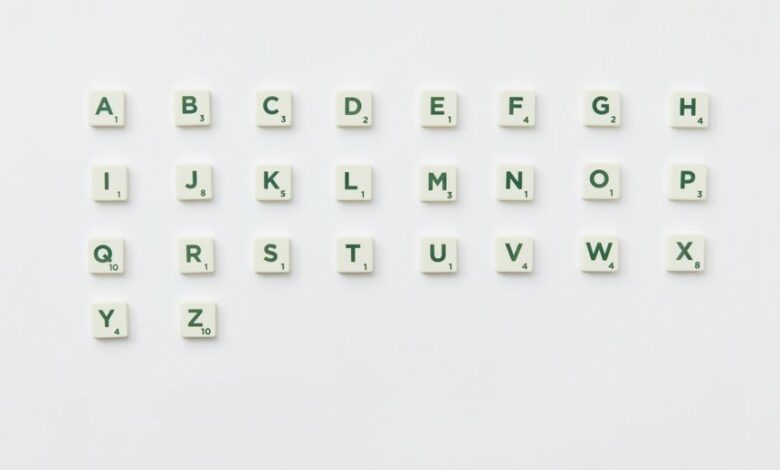
The string functions as a diagnostic artifact for pattern recognition. It blends familiar QWERTY segments with mirrored subparts, inviting analysis of chunking and anticipation in cognition. Repetition of adjacent blocks reinforces motor cues, while deviations trigger novelty detection. Although nonsemantic, the sequence engages schemas that guide attention toward coherence and surprise. This tension leaves a question: what hidden rules govern our responses to such structured randomness, and what does that imply for practice?
What the Qwerty String Reveals About Pattern Recognition
The Qwerty string, though devoid of semantic content, offers a diagnostic lens into human pattern recognition.
This examination reveals how cognitive systems default to identifying structure, even amid randomness.
Pattern recognition highlights tendencies toward order, mapping random looking sequences onto familiar schemas.
The result demonstrates an efficient, anticipatory processing strategy that constrains interpretation while preserving flexibility for novel, nonsemantic inputs.
How Repetition Shapes Memory and Typing Habits
Pattern recognition tendencies observed earlier in the Qwerty string provide a framework for understanding how repetition influences memory and typing behavior. Repetition stabilizes motor plans, enabling efficient sequence execution and faster recall. Pattern formation emerges as habitual routes, while memory cues anchor error reduction and speed gains. Two-word ideas: practice rhythms, cue associations.
The Psychology Behind Random-Looking Letter Sequences
Random-looking letter sequences provoke curiosity about how the mind organizes perceived randomness. The analysis delineates cognitive shortcuts: pattern recognition vs randomness, where schemas interpret coherence while deviations expose limits of expectation. The discussion highlights memory formation through repetition as a mechanism for efficient encoding, yet emphasizes heightened novelty detection when sequences defy learned patterns, guiding attention and judgment without prescribing behavior.
Practical Takeaways: From Jumbled Text to Quick Typing Cues
From the prior discussion of how the mind treats unlikely letter sequences, the practical takeaway focuses on converting those insights into actionable cues for typing efficiency. The approach relies on pattern recognition to guide fingertip anticipation and sequence grouping, reducing cognitive load. Memory formation strengthens through repetition, reinforcing reliable keystroke pathways and enabling quicker, more fluid transcription of even irregular strings.
Conclusion
The Qwerty string serves as a controlled mirror for perceptual heuristics, revealing how pattern recognition stabilizes otherwise chaotic input. Repetition reinforces encoding and speeds motor planning, while deliberate irregularities trigger novelty detection without breaking overall coherence. From an analytical lens, the sequence operates like a compass, guiding attention toward familiar keyboard economies and away from randomness. In essence, it is a metaphorical lab where the mind navigates predictability, using anticipation as a precise, efficient typing cue.

